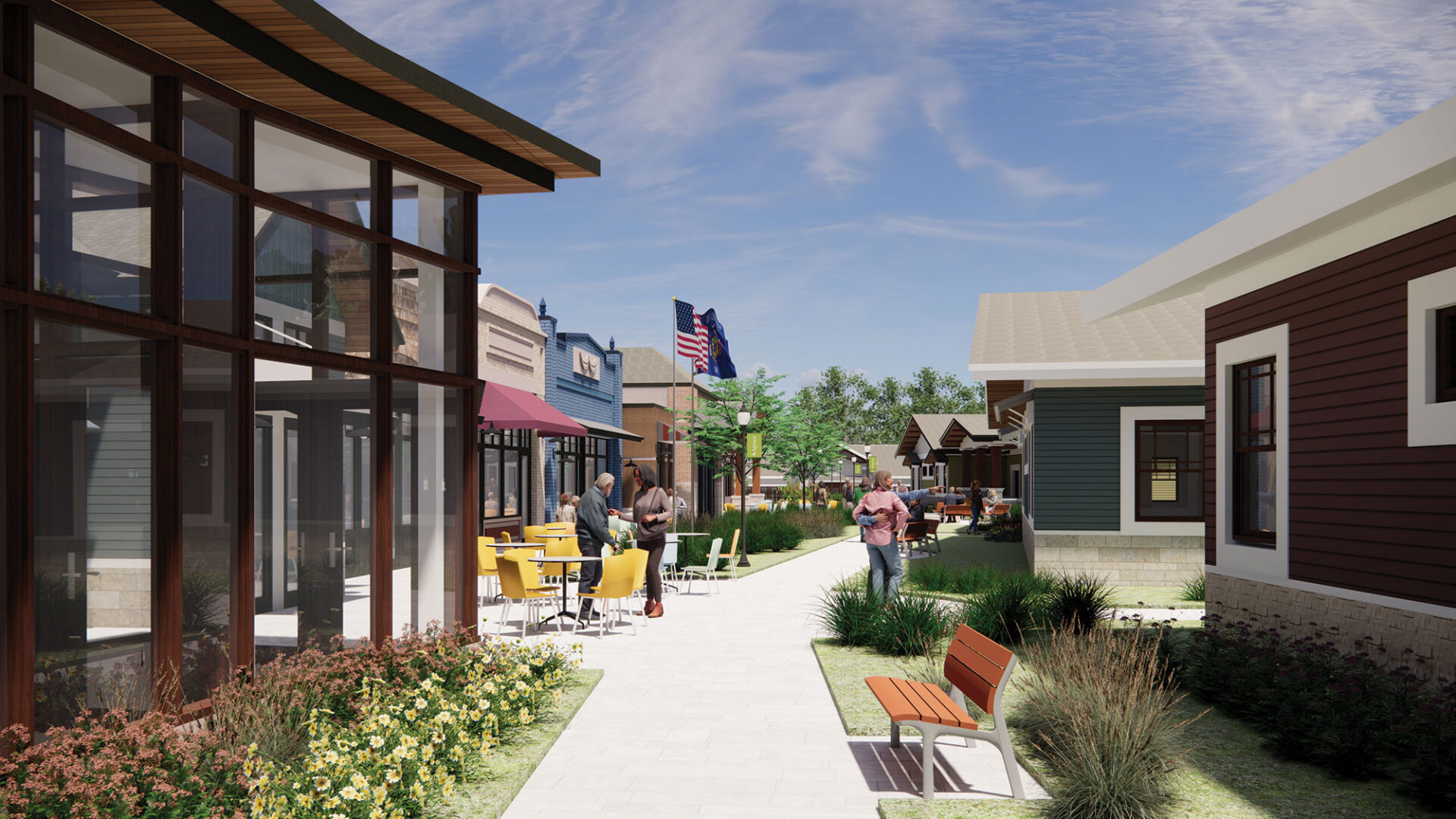
MADISON (WKOW) — Madison non-profit hospice group Agrace will break ground on its dementia village in two weeks, the first of its kind in the country. The village is modeled after The Hogeweyk Village in the Netherlands.

Text Size
A
A
Reset Text
Questions? We're here for you.
Friday, May 8, 2026
As reported by WKOW
MADISON (WKOW) — Madison non-profit hospice group Agrace will break ground on its dementia village in two weeks, the first of its kind in the country. The village is modeled after The Hogeweyk Village in the Netherlands.
Right now in the United States — caring for those with cognitive decline means prioritizing safety.
“We sort of warehouse them,” said Dr. Zorba Paster, a doctor and former nursing home director. “We put them into a place. We lock the doors so they can’t get out.”
But that could soon change with the new approach coming to Madison.
“They have almost 190 people that live in their [The Hogeweyk] village,” said Lynne Sexten, president and CEO of Agrace. “And we were astonished. We didn’t see anybody on oxygen, which is very common as you get closer to the end of life.”
In addition to the grocery store, gym and restaurant right on campus, the village will have eight homes with eight people in each, sharing spaces like a living room and kitchen. Residents must have a dementia diagnosis and will be grouped by shared traits to simulate a family environment.
“When these folks were young, that was the size of the family living under one roof,” Sexton said. “You start to get larger than that, it feels more institutional.”
Agrace is shifting away from that institutionalization and hyper-focus on safety. Paster says the socialization woven into the design extends residents’ quality of life.
“When you treat people with more interaction, they become more interactive, and that improves their life and their quality,” Pastor said. “And that also changes the trajectory of what ultimately is going to be their demise.”
Agrace is also offering free village housing to pre-healthcare students in exchange for their work, combating workforce shortages and boosting younger interest in memory care.
For students like Taylor Vander Groef, a pre-healthcare student at UW-Madison, she doesn’t just see it as a way to get the hundreds of clinical hours she’ll need to become a physician assistant, but a way to fill up her cup too.
“I think having that experience of actually working with and living with people with dementia would be so unbelievably valuable to an experience and valuable for a career going forward,” Vander Groef said.
“If they were living in a happier environment, I think that would be great for the patients and for the students,” Vander Groef said.
New things can have caveats, like a potentially high price tag. Agrace hasn’t set an exact price but says it’ll match other area providers.
When it comes to safety, Agrace is trusting residents, including during sundowning hours — the confusion those with dementia may experience later in the day, causing anxiety, aggression or even wandering. Agrace says they’ll combat this by tailoring a consistent routine for each resident.
“So it’s always concerning when you do something new, and it doesn’t mean you shouldn’t do something new,” Paster said.
Agrace is on track to break ground May 20, with construction to start in the beginning of May. The organization hopes to open in late summer 2027.
©2026 Agrace - All Rights Reserved. | Privacy Policy