
Text Size
A
A
Reset Text
Questions? We're here for you.
Tuesday, April 14, 2026
As reported by Holly Vossel, Hospice News
Hospices are seeing high competition in their hunt to attract and keep volunteers. More providers are creatively leveraging innovative technologies to improve retention.
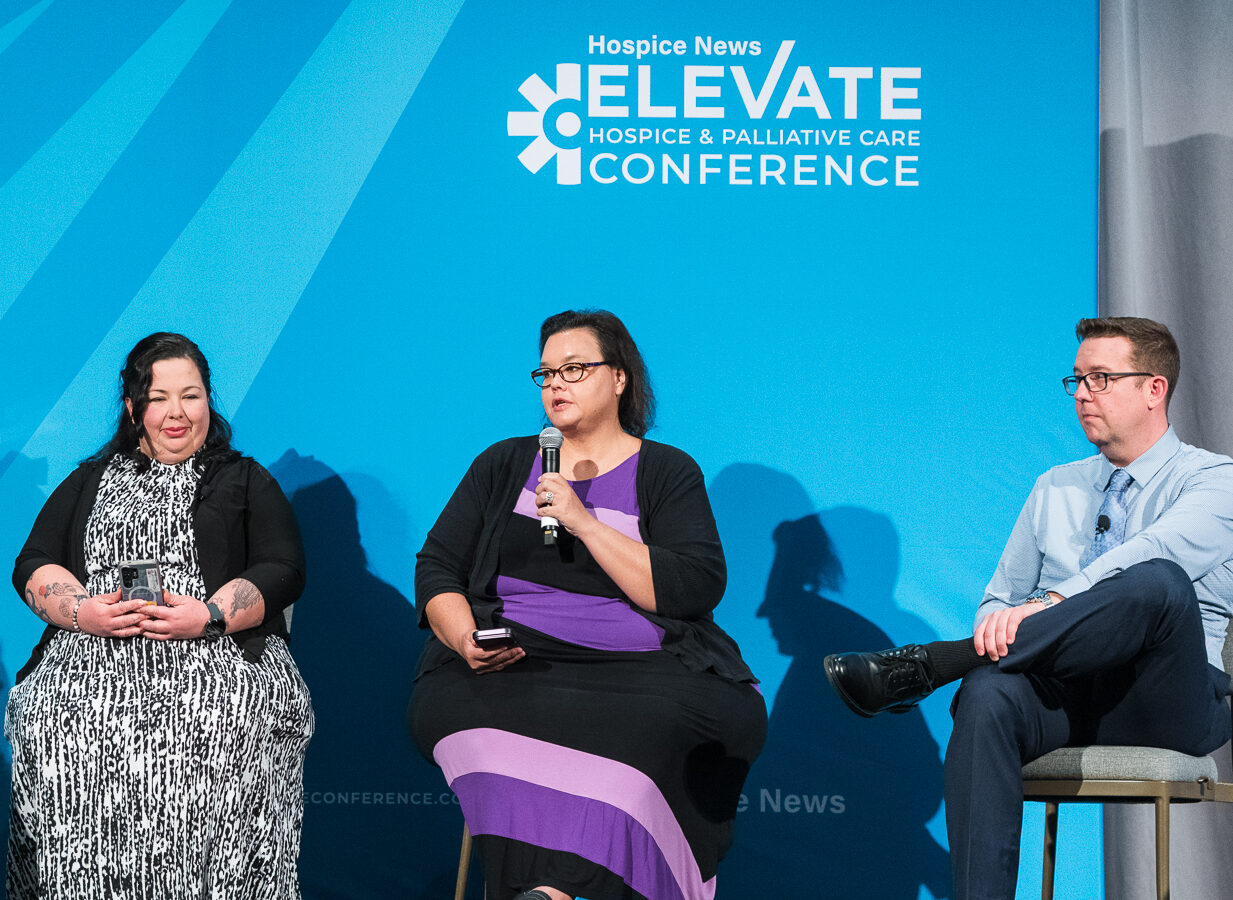
Artificial intelligence is creating new ways of identifying and managing volunteer-related activities, according to Shaena Whitney, director of volunteer services at Texas-based Angel Hands Hospice and Palliative Care.
AI tools could help providers to navigate Medicare requirements that volunteers must provide a minimum of 5% of hospice patient care hours, Whitney said at the Hospice News ELEVATE conference. Technology can help streamline volunteer workflows, while also creating more person-centered volunteer opportunities, she stated.
“We’re going into the age of AI, and that has been super apparent,” Whitney told Hospice News at the conference. “We’re going to be seeing some models that really can question who a volunteer is, and it’s going to help us match them with the right patient and track everything going forward that way. It’s not going to be quite so hard to get that 5% for a lot of people in coming years.”
AI technologies can be used to match volunteers’ interest, skills and background with opportunities at an organization, Whitney said. For instance, hospices can develop algorithms that align volunteers around patients’ needs and goals-of-care preferences, or identify potential areas of greater need in administrative tasks. Having more individualized volunteer pathways can help strengthen retention while allowing hospices to think outside of the box in their recruitment efforts, she added.
The next generation of hospice volunteers are seeking more mission-driven and impactful opportunities, said Jennifer Scurry, co-founder and administrator at Indiana-based Caring Cove Hospice LLC. Technology is helping hospices to better understand volunteers’ priorities, values and beliefs, which are key to steering recruitment efforts.
“AI is going to make a big impact on the future as volunteers and hospice evolves,” Scurry told Hospice News at ELEVATE. “That just means that as hospices, we have to stay creative, innovative and open-minded to the new opportunities that will come from this change. I think we’re going to start seeing a younger generation of volunteers [who] really like to align with things that they believe in. We’re seeing that already. So, it’s just creating that environment where they can feel like they’re part of something.”
Hospices are increasingly looking to AI innovations and other technologies to improve volunteer efficiency, according to Wade Udelhoven, talent acquisition manager for Agrace. The Wisconsin-based nonprofit provides hospice, palliative care, adult day services and dementia support.
More virtual volunteer opportunities developed during the pandemic when in-person visits were limited. The digital trend has continued to pick up steam in terms of recruitment and retention, allowing volunteers to provide more patient interaction and administrative assistance with less time-sensitive constraints, Udelhoven indicated.
“You know how much time your volunteers want to give, and some of that time is wasted if you’re not efficiently using their time,” Udelhoven told Hospice News at the conference. “Along with AI is just finding ways [to] efficiently use their time. How can you make that five hours the most impactful for patients? We’re still allowing connection to take place, maybe over a device, but be able to reach more patients more efficiently that way with volunteers.”
©2026 Agrace - All Rights Reserved. | Privacy Policy